
Existing glass
Preserves the appearance of the original glazing and the building's architectural aesthetic.
Advanced protection. Proven performance. Greater efficiency.
A modular transparent protective assembly for existing glazing and new-construction storefront or transaction-window applications, engineered to resist ballistic threats, delay forced entry, preserve optical clarity, and improve thermal performance.
System overview
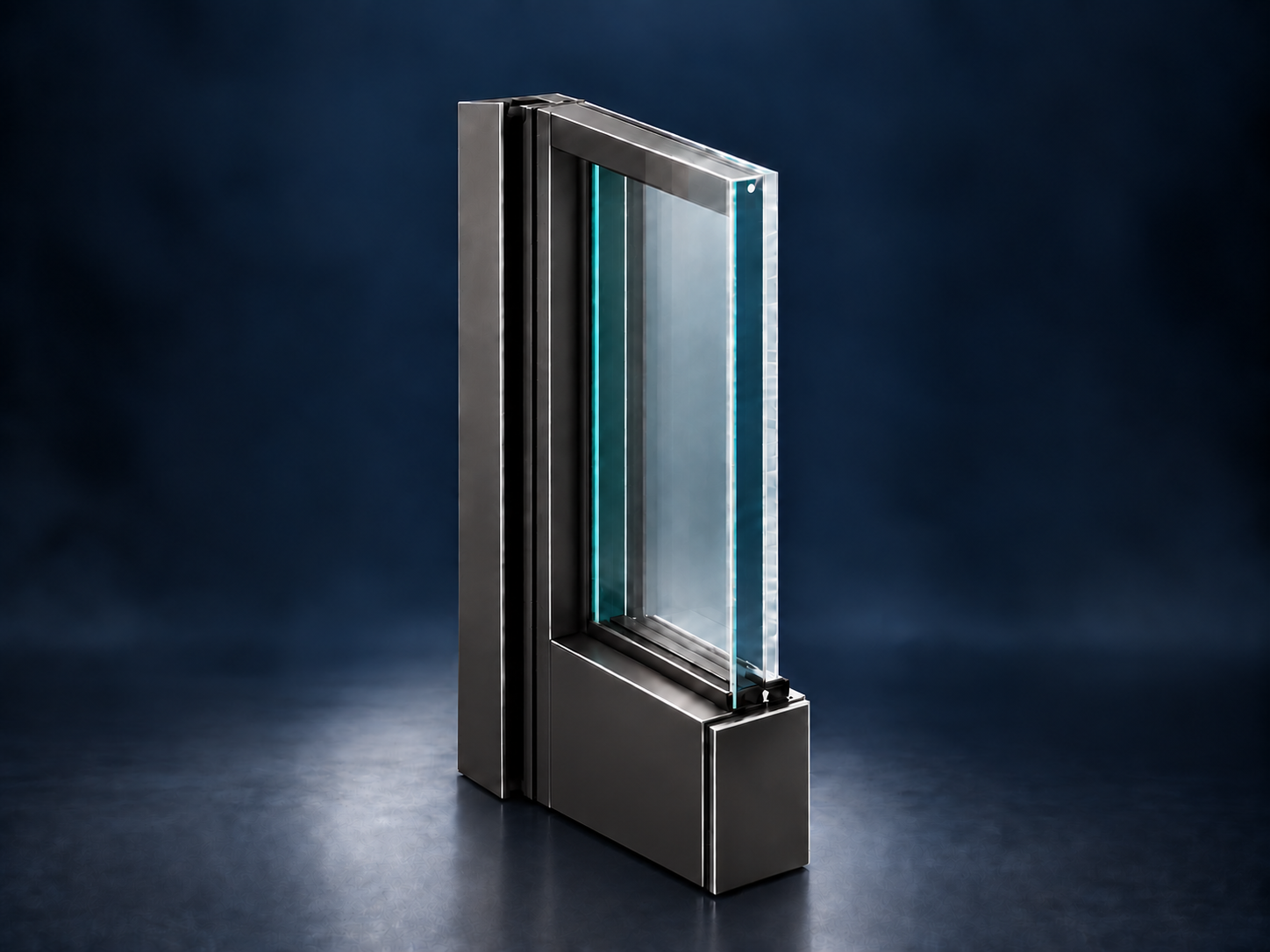
The Diamond Defense Ballistic Assault Barrier System™ can be retrofitted to existing glass doors and windows or integrated into new-construction storefront and transaction-window assemblies. The original glass remains toward the threat side, preserving the building's appearance, while the transparent BABS PCX™ Polycarbonate Hybrid is installed on the protected interior side.
A proprietary Energy Management Zone™ provides engineered separation for controlled system flexure and impact-energy dispersion while adding thermal resistance to help reduce heat transfer. A blast-rated structural sealant permanently bonds the system to the frame, supporting structural integrity and impact resistance.
The unidirectional assembly is engineered to resist ballistic threats, delay forced entry, and provide valuable response time while preserving optical clarity, architectural intent, and everyday functionality. Configurations are available for retrofit or new construction and for single- or dual-pane glazing.
How the system works
B.A.B.S. coordinates the existing glass, proprietary Energy Management Zone™, BABS PCX™ Polycarbonate Hybrid, structural sealant, framing interface, and anchoring as one system. The assembly is designed to keep damaged glass within the opening, absorb and disperse impact energy, and delay forced entry.
Preserves the appearance of the original glazing and the building's architectural aesthetic.
Engineered separation supports controlled flexure, impact-energy dispersion, and added thermal resistance.
An optically clear, scratch-resistant interior layer engineered to absorb and dissipate ballistic impact energy.
Blast-rated structural sealant permanently bonds the protective assembly to the frame.
Energy performance & thermal control
The B.A.B.S. assembly rejects solar and infrared energy and blocks ultraviolet radiation, helping reduce heat transfer, improve indoor comfort, and support lower cooling demand.
Published technical performance values. Actual building energy savings vary by glazing, climate, exposure, installation configuration, and operating conditions.
Proof is in the performance
These demonstrations show B.A.B.S. subjected to live-fire ballistic testing, including a protected-side penetration test of the unidirectional system. Performance claims apply to the tested configurations shown or documented.
A live-fire look at the system’s response under ballistic impact.
A live-fire demonstration of the system’s unidirectional design and protected-side response capability.
Need the right configuration?